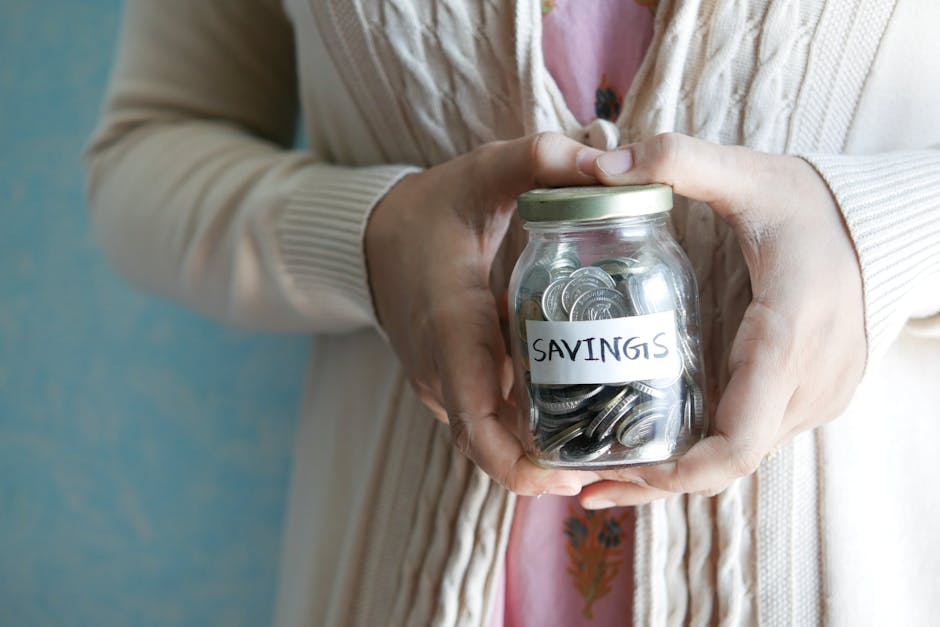

Authority guide · how to start an emergency fund when you ha… · 2026
How to Start an Emergency Fund When You Have No Money (The Timing Solution)
Stuck saving nothing each month? The problem isn’t your budget—it’s when you try to save. Learn the pay-yourself-first timing trick that captures money before spending claims it.
Why you feel like you have no money to save (it’s not what you think)
You don’t actually have no money—you have a timing problem. Your money gets claimed by other expenses before you can capture any for savings. This creates the false impression of having nothing available when you’re thinking about saving during the low-balance phase of your cycle.
Here’s what’s really happening every month: your paycheck hits your account. This creates a brief moment when you have more money than usual. Within 24-48 hours, automatic bills consume most or all of that balance. Planned expenses and immediate necessities take the rest. You spend the remaining days until your next paycheck managing a low or zero account balance.
When you think about saving money, you’re thinking about it during this low-balance period. There’s nothing available then. This creates what I call “false scarcity”—the feeling that you have no money to save. The reality is different. You do have money, but other things claim it before you can redirect it.
Think of it like trying to catch rainwater with a bucket that has holes in it. The water isn’t the problem—it’s that the water drains out before you can use it. Most people try to fix this by finding more water (earning more money). Others try plugging every tiny hole (extreme budgeting). The real solution is catching the water before it hits the leaky bucket.
The reason you can’t save isn’t lack of money—it’s that your money gets allocated faster than you can redirect it.
The paycheck drain cycle that claims your money before you can save it
Your money follows a predictable sequence every pay period. Day 1: paycheck arrives and your account balance peaks. Days 2-3: rent, utilities, and other bills automatically withdraw or get paid to avoid late fees. Days 4-14: groceries, gas, and daily necessities gradually drain the remaining balance. You end up back at zero or near-zero.
This cycle runs on autopilot. By the time you consciously think about saving, you’re already in the scarcity phase. Your brain correctly assesses that there’s no money available to save. But it’s assessing the wrong moment in the cycle.
The drain cycle claims your money through automatic processes. These happen faster than conscious decision-making.
Why your timing is wrong, not your budget
Most people try to save money at the end of the month or pay period. They wait until all expenses are handled. This backwards approach guarantees failure because you’re trying to save from whatever’s left over. When you’re living paycheck to paycheck, there is no leftover.
The solution is flipping the timing. Instead of trying to save what remains after spending, you save first. Then you spend what remains after saving. This isn’t just a mindset shift—it’s a mechanical one. It exploits the brief window when your account balance is highest.
Successful saving happens during the abundance phase of your cycle, not the scarcity phase.
How to capture money before the spending cycle claims it
The key is moving money to savings within 24 hours of your paycheck arriving. Do this before your normal spending pattern can claim it. This pay-yourself-first timing exploits the brief window when your account balance is highest and your brain doesn’t feel money stress.
The pay-yourself-first mechanism works because it interrupts your normal spending sequence at the very beginning. You have the most money then and the least psychological resistance to saving. Set up an automatic transfer to move money to savings the same day or the day after your paycheck hits your account.
Here’s the exact timing: if your paycheck arrives on Friday, schedule your emergency fund transfer for Friday or Saturday. Bills typically come out on Mondays and Tuesdays. You’re capturing money before those claims hit your account. The transfer happens before your brain has time to mentally allocate that money to other expenses.
Automation is crucial because it removes the daily decision-making. Immediate needs get to overrule your savings goals when you have to manually move money to savings. You’re competing against grocery needs, gas requirements, and bill anxieties. When it happens automatically, the money disappears before your brain registers it as “available to spend.”
Automation captures money before conscious spending decisions can override your savings goals.
Pay-yourself-first timing: moving money within hours of paycheck arrival
The optimal window is 0-24 hours after your paycheck deposits. Your account balance is at its peak during this time. Your stress about money is at its lowest. Your brain isn’t yet worried about upcoming bills or running out of cash before the next payday.
If you’re paid on Fridays, set transfers for Saturday morning. If you’re paid bi-weekly on Thursdays, schedule transfers for Thursday evening or Friday morning. The key is consistency—same timing relative to every paycheck. Don’t worry about the same day of the month.
The first 24 hours after payday are when your money is most available for redirection to savings.
Setting up same-day automatic transfers that bypass decision-making
Most banks allow you to set up automatic transfers that trigger based on direct deposit arrival. They don’t just use calendar dates. Log into your banking app and look for “automatic savings” or “recurring transfers” options. Set the frequency to match your pay schedule—weekly, bi-weekly, or monthly.
If your bank doesn’t offer deposit-triggered transfers, schedule them for the day after you typically get paid. The goal is removing yourself from the equation entirely. You shouldn’t have to remember to save money. You shouldn’t have to make the conscious choice each time.
The best savings system is one that works regardless of how busy, stressed, or forgetful you are.
What amount to start with when every dollar matters
Start with $5-15 per paycheck—small enough to avoid financial stress but large enough to break the cycle of saving nothing. These micro-amounts function as cycle-breakers rather than immediate emergency-solvers. They build the saving habit that allows larger amounts later.
When money is tight, your brain treats every dollar as critical for survival. Trying to save $50 or $100 per paycheck triggers what psychologists call “scarcity panic.” This is the mental state where saving feels impossible because you need that money for immediate needs. Starting with $5-15 per paycheck stays below this panic threshold.
Here’s how to think about small amounts: you’re not trying to solve financial emergencies with $10 per paycheck. You’re building the automatic saving mechanism. That mechanism will eventually handle larger amounts. Think of it like learning to ride a bike with training wheels. The training wheels aren’t meant to be permanent. But they’re essential for developing balance.
The psychological reframe matters. Don’t think “$10 won’t help in a real emergency.” Instead think “$10 proves I can redirect money before spending claims it.” That proof of concept is what lets you gradually increase the amount. Your confidence grows and your financial situation improves.
Small amounts that actually get saved beat large amounts that remain theoretical.
Why $5-15 per paycheck works better than trying to save more
Small amounts fly under your brain’s financial radar. When $10 moves to savings automatically, you barely notice it missing from your spending money. When $50 moves, you feel it immediately. You start questioning whether you can afford groceries or gas.
This isn’t about being weak-willed. It’s about working with your psychology instead of against it. Your brain is designed to protect you from threats. When money is tight, any reduction in available funds feels threatening. Starting small builds trust between your conscious goals and your survival instincts.
Your brain needs proof that saving money won’t threaten your immediate survival. Only then will it stop resisting larger amounts.
Building psychological momentum with milestone celebrations
Set celebration points that acknowledge your progress: $25 saved, $50 saved, $100 saved. These aren’t about the money amounts. They’re about proving to yourself that you can consistently redirect money away from spending. Each milestone reinforces that you’re someone who saves money, not someone who can’t.
When you hit $100 in your emergency fund, you’ve saved roughly $200 over the course of a year. This assumes you started with $5 per paycheck. That’s $200 that would have been spent on forgotten purchases or impulse buys. It might have just been absorbed into daily expenses. More importantly, you’ve built an automatic system that can scale up.
Celebrating small wins builds the identity shift from non-saver to saver. This makes larger amounts feel achievable.
Breaking the cycle that drains emergency funds once you build them
Keep your emergency fund in a separate bank or account type that requires extra steps to access. Create enough friction to make you pause but not so much that you can’t reach it in a real emergency. This prevents casual spending while maintaining emergency access.
Building an emergency fund is only half the challenge. The other half is preventing yourself from spending it on things that aren’t actual emergencies. When financial pressure builds, your brain starts changing the rules. It reclassifies wants as needs and conveniences as emergencies. Account separation creates a buffer against this mental shift.
The key is creating just enough friction to interrupt impulsive spending. You don’t want to create so much friction that you can’t access the money when you genuinely need it. A separate savings account at the same bank might require an extra login step. A high-yield savings account at a different bank might take 1-2 business days to transfer money back to your checking account.
This delay forces what psychologists call a “cooling off period.” When you want to use emergency fund money for something, the extra steps give you time to evaluate. Is this truly urgent or just convenient? Most non-emergency spending impulses fade within 24-48 hours if you can’t act on them immediately.
The right amount of access friction protects your emergency fund from convenience spending. It doesn’t block genuine emergencies.
Account separation strategies that create spending friction without blocking access
The simplest option is a separate savings account at your current bank. It requires logging into online banking and initiating a transfer. This creates a pause but still allows same-day access. For more protection, consider a high-yield savings account at a different bank. These take 1-3 business days for transfers.
Credit unions often offer “goal-based” savings accounts. You can label the account “Emergency Fund” and set up slight restrictions on withdrawals. Some apps like Digit or Qapital create additional friction. They require you to request transfers rather than making them instantly available.
The best protection level is one that stops your future stressed self from making impulsive decisions. It still allows your future emergency self to access the money.
Mental frameworks for distinguishing true emergencies from convenience spending
A true emergency is something that threatens your health, safety, housing, or ability to earn income. It can’t wait until your next paycheck. Car repairs that prevent you from getting to work qualify. Medical expenses qualify. A great sale on something you want doesn’t qualify, even if the sale ends soon.
Use the “paycheck test”: if you can reasonably wait until your next paycheck to handle this expense, it’s not an emergency. Use the “credit card test”: if you’d be comfortable putting this expense on a credit card and paying it off next month, it’s probably not urgent enough to drain your emergency fund.
Emergency funds are for threats to your stability, not opportunities for your convenience.
How to find money you didn’t know you had available
You likely have $10-50 in recurring charges you’ve forgotten about. These can be redirected to emergency savings instead of canceled services you don’t use. Strategic timing of bill payments can create brief windows of available money too.
Most people have subscriptions and services running on autopilot. They barely remember signing up for these. These forgotten recurring charges represent money that’s already leaving your account automatically. You can redirect this money to emergency savings instead of services you don’t actively use.
Start with a systematic audit of your bank and credit card statements from the past three months. Look for any recurring charges under $25. Common culprits include streaming services you signed up for during free trials. Gym memberships you’ve outgrown. App subscriptions that auto-renewed. Monthly services you meant to cancel.
Don’t just cancel these subscriptions. Redirect that exact dollar amount to your emergency fund. If you find a $12 streaming service you don’t use, set up a $12 monthly transfer to savings. Your budget doesn’t change—you’re just changing where that money goes. Your brain is already used to that money being unavailable for other spending.
Redirecting forgotten recurring charges to savings maintains your current spending pattern while building emergency funds.
Systematic audit of automatic recurring charges you’ve forgotten about
Download three months of bank and credit card statements. Search for the same company names or amounts appearing monthly. Check your phone’s app store subscriptions. Both Apple and Google show you all active subscriptions with renewal dates and amounts.
Make a list of every recurring charge with the amount and what it’s for. Then honestly assess how often you used each service in the past month. If you haven’t used a service in the past 30 days, you probably won’t miss it. The money can go to savings instead.
Most people discover $20-50 in monthly charges for services they forgot they had or stopped using regularly.
Redirecting subscription payments to savings instead of canceling them
This psychological trick works because your brain is already budgeted for that money to disappear monthly. If you cancel a $15 subscription, that $15 often just gets absorbed into other spending. If you redirect it to savings, you’re replacing one automatic withdrawal with another.
Set up the emergency fund transfer to happen on the same date the subscription used to charge. If Netflix charged on the 15th, make your savings transfer happen on the 15th. This maintains the timing pattern your brain expects. You’re just changing the destination.
Your brain accepts redirected recurring charges more easily than new savings amounts. The spending pattern stays familiar.
When you have competing urgent needs (debt vs emergency fund)
Build a small emergency fund first ($200-500) even if you have debt. This prevents small emergencies from forcing you into more debt. This mini-fund stops the cycle where unexpected expenses create larger financial problems.
When money is extremely tight, you face an agonizing choice. Should you put every extra dollar toward debt payments to reduce interest charges? Or should you build an emergency fund first? The conventional wisdom says tackle high-interest debt first. But this advice assumes you won’t have any emergencies while paying down debt.
Here’s the reality: without any emergency buffer, a $200 car repair or $150 medical bill forces bad choices. You either miss debt payments (creating late fees and credit damage) or add new debt to cover the emergency. Either choice makes your debt situation worse, not better. A small emergency fund prevents this cascading effect.
The sweet spot is building $200-500 in emergency savings before focusing aggressively on debt paydown. This amount handles most minor emergencies without derailing your debt progress. It’s small enough to accumulate relatively quickly even with minimal available money. Once you have this buffer, you can redirect your savings efforts toward debt payments.
A small emergency fund prevents minor financial shocks from becoming major debt increases.
Decision tree for priority allocation when money is extremely tight
If you have less than $10 per month available: put it all toward a basic emergency fund until you reach $200. If you have $10-25 available: split it 70% emergency fund, 30% debt payments. If you have more than $25 available: build emergency fund to $500 first, then focus on debt.
The exception is debt with penalties for missed payments or very high interest rates (over 25%). In these cases, maintain minimum emergency fund building ($5 per month). Direct most extra money toward the crisis debt. Resume emergency fund building once you’ve stabilized the highest-risk debt.
Emergency fund building takes priority when you’re vulnerable to cascading financial problems from small unexpected expenses.
When to pause emergency fund building and when to restart
Pause emergency fund building if you’re facing immediate consequences. These include eviction notices, utility shutoffs, or minimum payment defaults on critical debt. In crisis mode, every dollar goes toward preventing immediate consequences. Resume building once the immediate crisis is resolved.
Restart emergency fund building the month after you’ve addressed the crisis. Do this even if you had to deplete your existing emergency fund to handle it. The cycle of build-deplete-rebuild is normal when money is tight. The key is restarting the building process quickly. Don’t wait until you feel financially stable.
Emergency fund building works in cycles when money is tight. The important thing is restarting quickly after depletion.
Frequently asked questions
How much should I save if I can only afford $5 per paycheck?
Start with exactly that—$5 per paycheck. Over a year, that’s $120-130 depending on your pay schedule. This is enough to handle small emergencies like a prescription copay or minor car issue. More importantly, you’re building the automatic saving habit that lets you increase the amount later as your situation improves.
What if I keep having to use my emergency fund for small things?
This is normal when you’re building your first emergency fund on a tight budget. The key is to restart saving immediately after using the fund, even if you can only save $5 the next month. Each time you rebuild, you’re reinforcing the saving habit and gradually increasing your buffer against future small emergencies.
Should I pay off debt or build an emergency fund when money is tight?
Build a small emergency fund ($200-500) first, then focus on debt. Without any emergency buffer, unexpected expenses force you to miss debt payments or take on new debt. This makes your situation worse. A basic emergency fund prevents small financial shocks from becoming bigger debt problems.
How do I avoid spending my emergency fund on things that aren’t real emergencies?
Keep your emergency fund in a separate account that takes 1-2 business days to access. Use the "paycheck test"—if you can reasonably wait until your next paycheck for this expense, it’s not an emergency. True emergencies threaten your health, safety, housing, or ability to earn income.
What counts as a true emergency when you’re already living paycheck to paycheck?
A true emergency threatens your stability and can’t wait until your next paycheck. Examples include: medical expenses, car repairs needed to get to work, essential home repairs like heat in winter, or unexpected work expenses you need to keep your job. Sales, opportunities, or conveniences don’t qualify.
Is it worth saving when I can only put away tiny amounts each month?
Yes. Even $5 per month proves to yourself that you can redirect money away from spending. This builds the psychological foundation for saving larger amounts later. Plus, small amounts add up faster than you think—$5 per month becomes $60 per year, enough for several minor emergencies.
How do I stay motivated when my emergency fund keeps getting depleted?
Reframe depletion as success, not failure. Every time you use your emergency fund instead of going into debt or missing other payments, it’s working exactly as intended. The key is restarting the saving process immediately, even with small amounts, rather than waiting until you feel financially stable.
What if my paycheck timing makes it impossible to save anything?
Look for forgotten recurring charges you can redirect to savings instead of finding new money. Most people have $10-30 in monthly subscriptions they rarely use. Cancel these and set up automatic savings for the same amount on the same day—your brain won’t notice the difference, but you’ll be building an emergency fund.
Starting an emergency fund when money is tight isn’t about finding extra money you don’t have. It’s about capturing the money you do have before your normal spending cycle claims it. The pay-yourself-first timing system works because it exploits the brief window when your account balance is highest and your brain isn’t in worry mode. Even $5 per paycheck breaks the cycle of saving nothing. It builds the automatic habit that scales up as your situation improves. Remember, you’re not trying to solve major financial emergencies with tiny amounts. You’re building the mechanism that will eventually handle larger amounts. This system prevents small unexpected expenses from becoming bigger debt problems. The key is starting the system immediately, even imperfectly, rather than waiting until you feel ready or can afford larger amounts.